


Norway is all the proof we need that Rosebank must be approved
Norway is all the proof we need that Rosebank must be approved

Matthew LynnSat, October 31, 2026 at 9:00 AM UTC
0
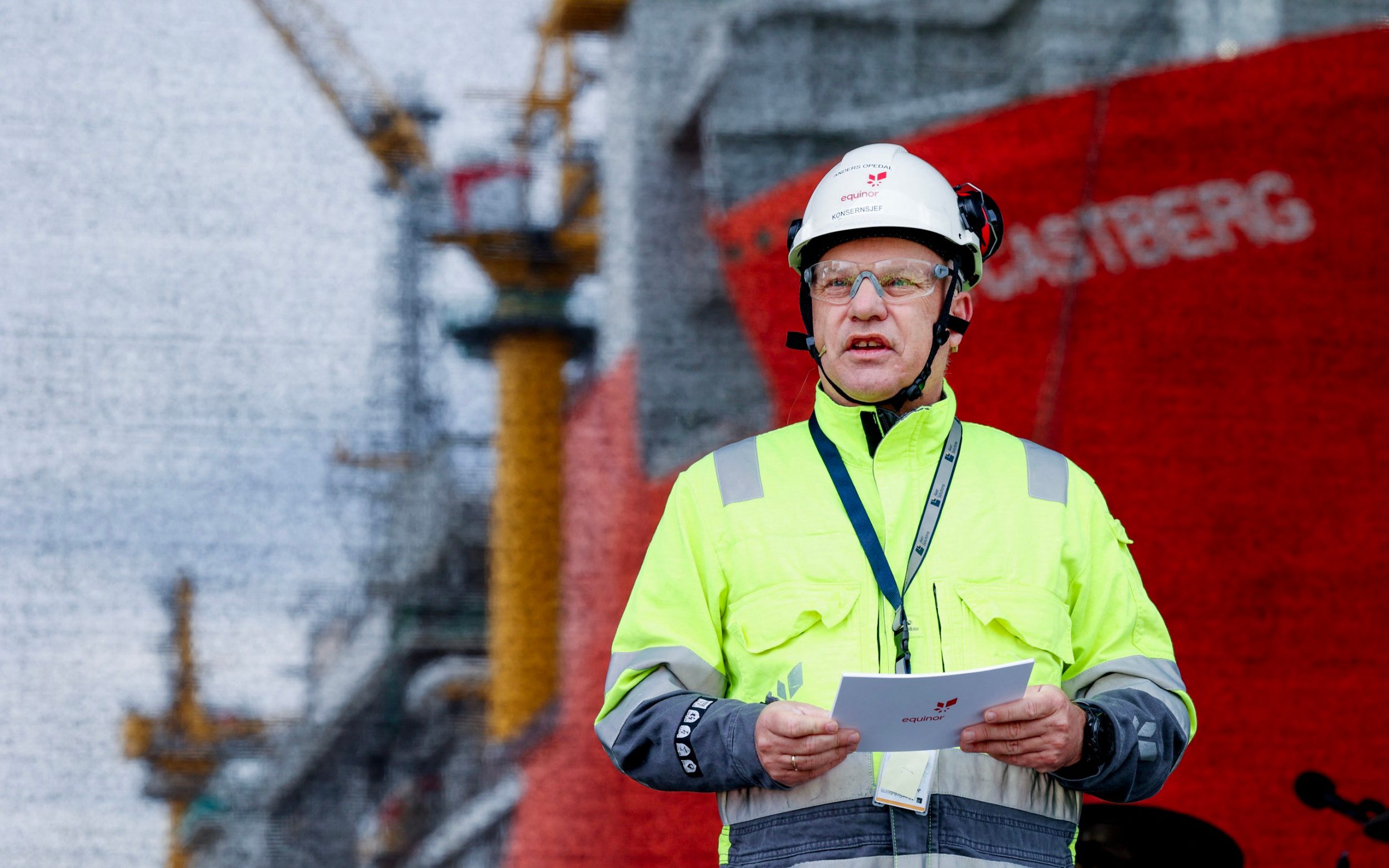
Anders Opedal, the chief executive of Equinor, which reported another strong set of results this week - NTB / AFP/ Silje Katrine Robinson
It was great to read this week about how well one of the major players in the North Sea is doing, and how much the whole country is benefiting from its success. Output is booming, it has reported its strongest profits in four years, plenty of skilled jobs are being created, and the government is raking in hundreds of millions in extra revenue both as a shareholder, and, of course, from all the taxes it pays.
There is just one catch. The company is Norway’s Equinor, and it is our Scandinavian neighbours who are benefitting from its success.
The Norwegian giant is a template for how we could be managing our own energy resources – if only our political leaders stopped dithering and had the sense to follow its lead.
Equinor reported another strong set of results this week. Its earnings before tax for the third quarter doubled to $12.4bn (£9.3bn) from $6.2bn, the highest level since 2022. Production is up, and its pipeline is strong.
“The basis for this result is, of course, that we have increased production and, just as importantly, that prices have risen significantly,” according to Anders Opedal, its chief executive. Indeed, there is plenty more where that came from. On Thursday the company announced that estimates of the amount of recoverable gas in its Afrodite field were more than double the earlier estimates. It will be keeping the pipelines full for many years to come.
Given all that, it is no great surprise that its shares are up by 86pc so far this year, and keep hitting all time highs. The Norwegian government owns 67pc of the company, so at a rough estimate it has made more than £20bn this year alone from its shareholding.
On top of that it has collected corporation tax, as well as the petroleum taxes which, when taken together, means the government takes in more than 70pc of any profits made by its energy giants. In short, it is not just that the company is doing well. So is the whole country. Indeed, all the money Equinor is generating helps explain why Norway has a huge budget surplus and has been cutting taxes.
The contrast with Britain could hardly be more painful. While a company such as Equinor is booming on the back of strong oil and gas prices and rising production, we have been running down our own resources.
Advertisement
Equinor itself has always been a major player in the fields off the Aberdeen coast, but only last month it repeated that a combination of punishing taxes and activist-led lawfare meant the industry was “uninvestable”.
Overall North Sea production has been in steady decline for years, and all the so-called renewable experts keep telling us that it is pointless to think about preserving it because there is hardly any oil and gas left in its exhausted fields, and even if there were it wouldn’t make any difference to the global price. Even leaving aside our “global leadership” on combatting climate change there isn’t any money to be made.
The Norwegian example tells that is not, to be put it politely, quite the whole story. We have, in fairness, taken one tiny baby step towards boosting production again in the British section of the North Sea.
After years of tortured delays the Jackdaw gas field has finally been approved. But we are still waiting on a final decision on the Rosebank field, even though, bizarrely, both the Chancellor and the Office for Budget Responsibility have already pencilled in the tax revenues that will start flowing once it starts production. Apparently it is still being held up while Labour’s boneheaded backbenches fight a rearguard action to try to delay it all over again.
That is simply not good enough. There is no reason not to approve the field immediately. Dithering and delaying doesn’t help the workers in Aberdeen who need jobs, it doesn’t help a Treasury that needs the money, and it doesn’t even help the climate, given that we just import fossil fuels instead. All it does is reinforce the impression across the energy industry that Britain is no longer a serious country, and not one worth wasting time and money on. and money on.
Our approvals should not stop with just those two fields, there is so much more that we could be doing. Offshore Energies UK has identified more than 100 projects in the North Sea that we could be exploiting, while the Norwegian experience tells us that once you start drilling, and using the latest techniques, there is always more energy locked up in the ground than initially expected.
In reality, Equinor is a role model for how to manage the North Sea while gradually transitioning to wind, solar and nuclear power. Extend the life of existing fields for as long as you can and develop new ones where possible.
Tax the industry so the Government makes plenty of money, but not at such a high rate that it is impossible for the companies investing their capital to make a decent return or to reward their shareholders for the risks they are taking. And, if possible, take a significant government stake in the main exploration and development company so that the state benefits as a shareholder and doesn’t have any incentive to punish the operators with sky high taxes. It is hardly complicated stuff.
All we need are the political leaders with the basic intellectual curiosity to take a look at something that is working really well for a close neighbour, and one with almost exactly the same geographic resources we have. Given the track record of this Government, we won’t hold our breath – but the template is right there in front of us.
Source: “AOL Money”
